chit at work
Recording conversations at work: writing a policy
This page is written for the person who has to decide what their organisation's rule is — not for someone trying to work out whether they can record a colleague. It sets out what such a policy usually addresses. It is general information, not legal advice, and a policy should be drafted with counsel.
This is general information, not legal advice. Recording law varies by state and by situation, it changes, and only a lawyer in your jurisdiction can tell you what applies to you. chit records only while you hold the button — that is a fact about the device, not a statement that any particular recording is lawful.
Two gates, not one
The most common confusion is treating legality and policy as the same question. They are separate, and both apply.
The first gate is law: state and federal statutes govern recording private communications, and they vary. The second is the organisation's own rule, which can be stricter than the law — an employer in a one-party state may still prohibit recording internal meetings, and that prohibition can be enforceable as an employment matter even where the recording itself would not be unlawful.
A policy that only says follow the law has not done its job, because it leaves every employee to work out fourteen statutes on their own. A policy that only says never record has usually not thought about the field technician who narrates job notes.
What a policy usually has to address
The list below is what tends to come up. It is not a template and it is not advice — a policy should be written with counsel who knows your jurisdictions and your industry's rules.
- Scope: internal meetings, client conversations, calls, in-person, video, and whether personal devices are covered differently from issued ones.
- Whether disclosure or consent is required, and from whom, in states where the law does not require it.
- Who owns and can access recordings made in the course of work, and where they are stored.
- Retention and deletion — how long recordings are kept and who decides.
- Legitimate work uses that should be permitted rather than accidentally banned: field notes, inspection narration, shift handovers, accessibility accommodations.
- Jurisdictions where the organisation operates, and how the rule changes across them.
- What happens when a recording is requested in litigation or by a regulator.
Where device choice matters
Two properties tend to decide whether a policy can permit a tool at all.
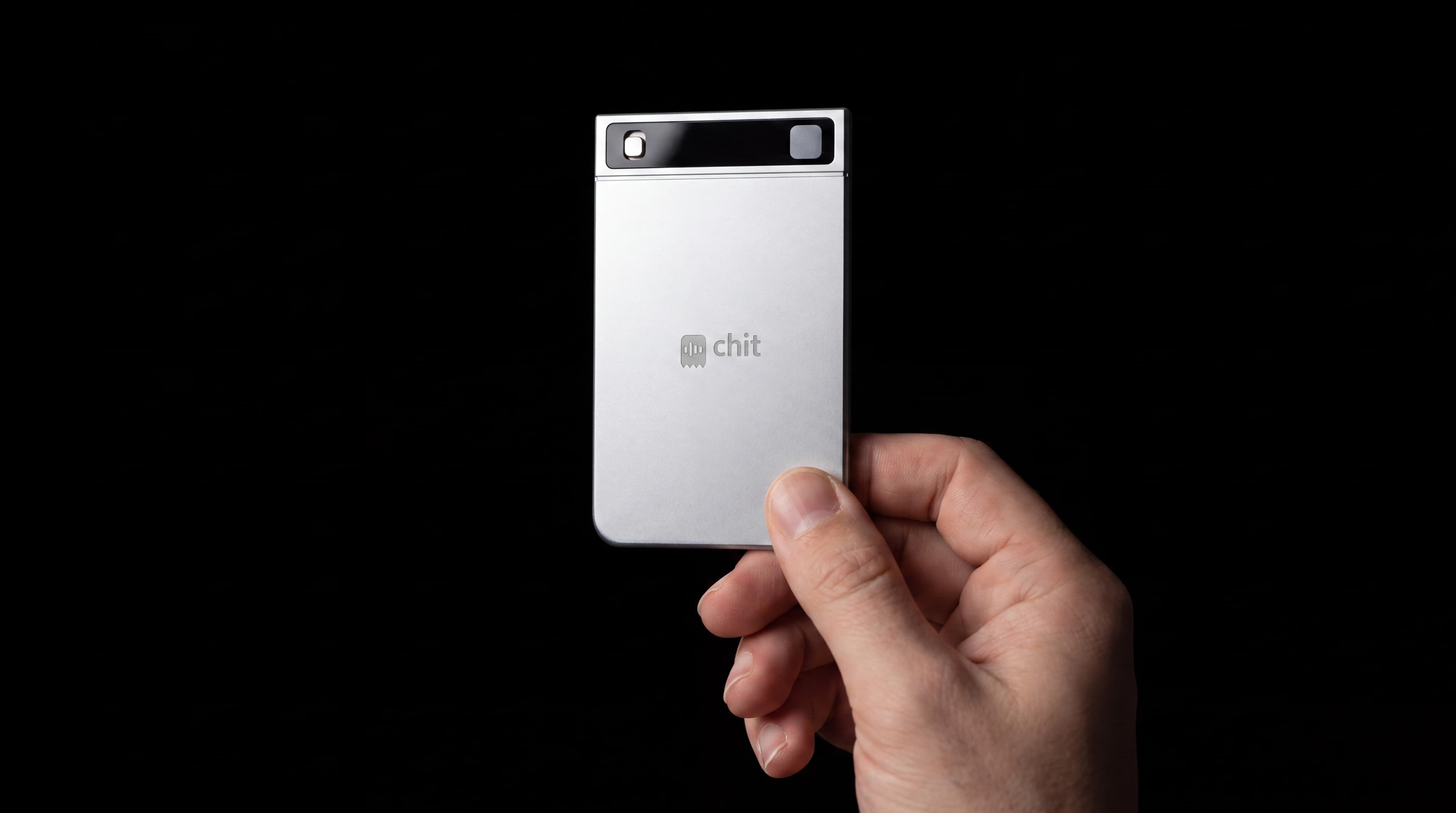
The first is whether it can record without anyone knowing. An always-on wearable or a background application creates a category of question a policy has to handle: what else was captured, for how long, and who could know. A device that records only while a button is physically held does not create that category — chit has no wake word and no always-on microphone, so a capture is a deliberate, visible act with a beginning and an end.
The second is where the data goes. For most organisations the blocking question is not whether people take notes, it is whether the audio of internal conversations leaves the environment. chit's enterprise deployments keep captures, transcripts and digests resident in your own VPC rather than ours, which is usually the answer that makes a policy writable. See hichit.com/enterprise.
Good questions
Can an employer ban recording even in a one-party state?
Employers commonly set rules stricter than the statute, and those can be enforceable as an employment matter. Whether a specific rule is enforceable in your jurisdiction is a question for counsel.
Is there a template we can copy?
We do not publish one, deliberately. A recording policy depends on your states, your industry's rules and your data obligations, and a copied template is how organisations end up with a rule that does not apply to them.
Where does the audio live if we deploy this?
For enterprise deployments, in your own VPC — captures, transcripts and digests resident in your cloud rather than ours. See hichit.com/enterprise.
Can the device record without an employee knowing?
No. It captures only while the button is physically held. There is no wake word and no always-on microphone, so there is no ambient capture for a policy to have to address.
Reviewed 2026-08-07.
Nearby trades