chit at work
Job site voice notes: a clear recap after the work
Every trade has the same documentation problem: the details that matter surface while your hands are full. The measurement is taken on the ladder, the change order is agreed at the truck, the punch-list item is spotted on the walk-out — and the writing-down was supposed to happen later, which is where it dies.
The clipboard problem
Paper needs a free hand, a flat surface and a pen that has not walked off. A phone needs clean fingers, an unlock and an app — and then it is out on a site where phones get dropped. So documentation waits for the tailgate or the office, and what reaches it is a compressed, reordered version of the day. The gap between what was seen and what got written is where callbacks, disputed change orders and forgotten materials live.
Talk the walk
At a suitable stopping point, record a short recap while the details are fresh. chit records only while the button is held. State the job, location, observation, and next action, then review the resulting text before using it in the job record. A few habits make the recap easier to check:
- Open with where and what: the job name, the unit, the room — the recording carries its own index.
- Say measurements and model numbers twice. They are what you will search for later.
- One capture per subject: the punch item, the materials list and the change order retrieve better as three short notes than one long one.
- Close with the action: "so — order the 3-ton and call the GC about Thursday." A note that ends in a commitment becomes a to-do on its own.
What comes back: the end-of-day log, pre-written
Every capture becomes a transcript, and at the end of the day the whole set comes back as a digest — what happened on each job, what was decided, and the next steps pulled out. That is a daily log you spoke in real time instead of reconstructing at the tailgate, and ask-anything search runs across all of it, so "what did we say about the panel at Fairview" is a question, not an excavation.
From notes to paperwork
The office half works without retyping. With mail connected, follow-ups arrive drafted from what was said — the recap to the GC, the materials request to the supplier — and you send them yourself. Transcripts and summaries export as plain text, so whatever the note needs to become next, it starts as text instead of memory. What chit does not do is generate invoices or sort your notes into a punch-list app; the output is the transcript, the summary and the next steps, and it is honest to say that is the whole of it.
The device is $129 (chit one) or $179 (chit one Pro), plus $9 a month for unlimited transcripts, the digest, search, connections and backup. It runs about a month on a charge, so it is not another thing to put on the truck charger. Free shipping, free 30-day returns, one-year limited warranty.
Trade by trade
The narrate-as-you-go pattern bends to each trade — the HVAC changeout survey, the plumbing rough-in walkthrough, the electrical panel schedule, the roofing inspection with both hands on the ladder. The related pages below cover the specifics for each, and the noisy-environment guide covers making yourself heard over a compressor.
One line worth keeping in mind: your own narration is just your voice, but if a homeowner or a crew conversation ends up in the recording, consent law can apply — the state-by-state reference is linked below.
Good questions
Does it work with gloves on?
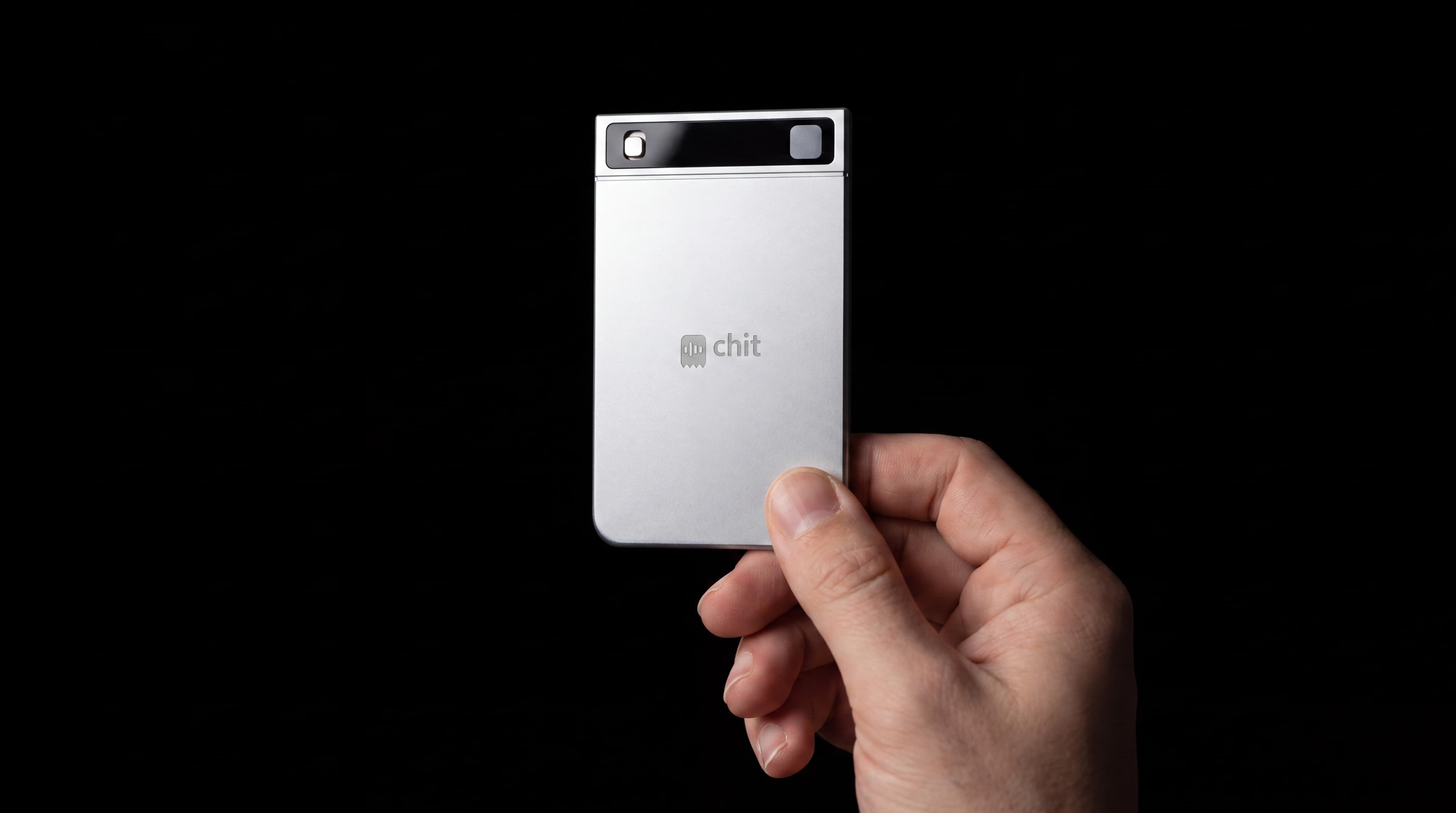
Yes — one physical button, hold to record, no screen to hit. That is most of why it is a card and not an app.
What about basements and dead zones?
Capture needs no connection at all. The recording logs on the device and syncs when it next sees signal; the transcript arrives then.
Can it handle a loud site?
Noise can make a recording harder to review. Choose a suitable quiet stopping point for your own recap and check technical terms and numbers in the transcript against your source records. We do not publish an unmeasured noise-performance or transcription-accuracy figure for chit.
How do my notes get to the office?
Follow-up emails arrive drafted from the capture and you send them; transcripts export as plain text. Nothing is retyped and nothing sends itself.
Reviewed 2026-09-08.
Nearby trades
chit for construction
Your daily log is your delay-claim defense. Voice makes it actually get written.
Service tech / install leadchit for HVAC
A clear post-visit recap helps the office see which job needs the next step.
Service plumberchit for plumbing
A useful visit recap keeps the scope, findings and next office action together.
Electrician / foremanchit for electrical
What the inspector said on-site should not live only in your foreman's head.
Estimator / crew leadchit for roofing
The supplement you forgot to write down is the margin you lost.