chit at work
An AI voice recorder for field technicians
Field work produces the most valuable notes of any job and the fewest written ones, for an obvious reason: your hands are full, the phone is in the truck, and by the time you are somewhere you could type, the model number is gone. This is what a dedicated capture device is for.
The note that never gets made
Every trade has the same shape of loss. You are at the equipment, you find the problem, the customer approves one thing and declines another, and there is a model number on a plate you are already walking away from. All of it is spoken. None of it is written. The invoice, the parts order and the follow-up all depend on it, and they get reconstructed hours later from memory.
This is not a discipline problem. Writing while working is a physically bad idea in most of these environments, and a phone is the wrong instrument for it: unlock, find the app, type with gloves off, in the rain, in front of a customer who is now watching you use your phone.
What the device is
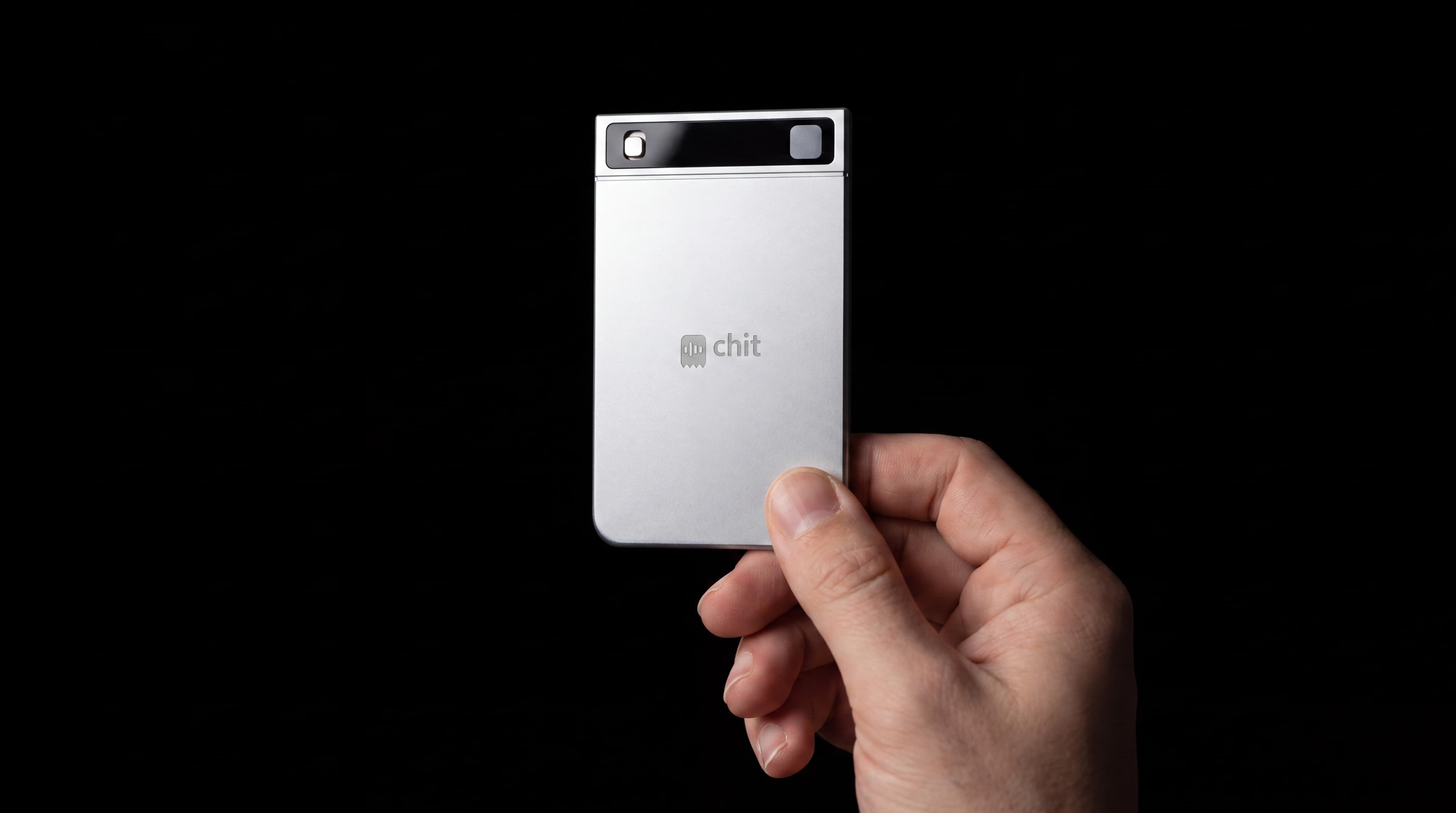
chit is a card the size of the ones in your wallet — 53.9 by 86 millimetres, 3.9 thin — with one button. Hold it, say what you found, let go. It works through a glove and it does not require taking a phone out. There is no wake word and no always-on microphone: it captures only while you are holding it, which is also what makes it usable in front of a customer.
It records with no signal and syncs later, which covers basements, crawlspaces, mechanical rooms and rural calls. The battery runs about a month of typical use, so it is not another thing to charge nightly.
What comes back at the end of the day
With the $9 a month membership, every capture becomes a transcript and the day comes back as a digest: the jobs you ran, what the customer approved and declined, the parts to order, and the follow-ups you promised. The things that were going to be reconstructed from memory are simply written down.
The part that compounds is search. Ask what the customer at that address said about the compressor in April and you get the moment back with a timestamp. A tech's memory covers about a week; the archive covers the year, which is where the second visit and the maintenance-agreement conversation actually come from.
For a shop rather than one tech
A company deploying this across a crew gets the same capture on every truck, with the transcripts and digests in one searchable place instead of in each person's head. What it is not is a monitoring product — there is no sentiment scoring, no talk-time dashboard, and no per-tech metrics. Those things do not exist here, and describing them would be describing a different product.
For fleets, enterprise deployments carry your own branding and keep the data resident in your own VPC rather than ours. That is usually the first question anyone in the field-service world asks, and it has a straight answer: hichit.com/enterprise.
Good questions
Does it work with gloves on?
Yes — it is one physical button held down, not a touchscreen. That is most of why a separate device beats a phone in the field.
What if there is no signal at the job?
Capture needs no connection at all. The captures sync and the transcript arrives when the device is next in range.
Do I need a field service platform for it to be useful?
No. chit is a $129 card and its own app. You get the drafted notes back that evening and paste them wherever your jobs actually live — a two-truck shop gets the same capture as a franchise.
Is it recording me all day?
No. It records only while the button is physically held. There is no wake word and no always-on microphone, which is also what makes it usable standing next to a customer.
Can a company buy these for a whole crew?
Yes — fleet deployments carry your own branding and keep every capture resident in your own VPC. See hichit.com/enterprise.
Reviewed 2026-08-07.
Nearby trades
chit for HVAC
A clear post-visit recap helps the office see which job needs the next step.
Service plumberchit for plumbing
A useful visit recap keeps the scope, findings and next office action together.
Electrician / foremanchit for electrical
What the inspector said on-site should not live only in your foreman's head.
Field techchit for appliance repair
Every second truck roll started with a part number nobody caught.
Mechanicchit for elevator service
Callbacks drop when the last visit's notes actually exist.