chit at work
Service call notes template for the handoff to the office
The office needs enough context to handle the next step without reconstructing the visit. This service call notes template separates what the customer reported, what the technician observed, what was done, and what still needs a decision. Use it alongside the job record your team already keeps.
Copy the service call notes template
Start with the job identifier and equipment or work area. A clear reference is more useful than repeating private customer details in several places. Keep the established job record as the home for contact details, approvals, and supporting documents.
Use one note for a visit. If several unrelated issues were investigated, give each its own finding and next step so a completed task does not hide unfinished work.
| Field | What to record |
|---|---|
| Visit | Job ID; visit date and time; technician; equipment or work area |
| Reported issue | What the customer or dispatcher described; who supplied the information |
| Observed on site | What you actually saw, heard, measured, or checked; reference supporting records |
| Work completed | Work performed during this visit and the relevant job-record reference |
| Parts and materials | Items used; items still needed; exact identifiers still requiring verification |
| Decision or approval reference | The existing approval or decision record; mark anything still awaiting confirmation |
| Current status | Complete, return visit needed, awaiting information, or another clear state |
| Office next step | Specific task; owner; due date or checkpoint; dependency |
| Customer follow-up | What update was promised, by whom, and when |
| Review | Technician review completed; office acknowledgment or question |
Keep reported, observed, and inferred details separate
“The customer says the problem starts in the afternoon” records a report. “The equipment was operating during the visit” records an observation. “The cause is confirmed” is a different statement and should only appear when your actual findings support it.
The same discipline applies to quantities and identifiers. If a model number was hard to read, flag it for verification. Do not turn an uncertain spoken number into a parts order without checking the relevant equipment or record.
This is a communication template. It does not replace your service procedures, required inspection forms, or the approval process your business already uses.
Filled example: an intermittent issue
The following example is fictional and illustrates the note structure. It does not describe a completed chit deployment or recommend a diagnosis.
| Field | Example note |
|---|---|
| Visit | Job H-418 · 2026-09-08 · Technician: Casey · Upstairs system |
| Reported issue | Customer reports the upstairs room feels warm late in the afternoon. |
| Observed on site | System was operating during the visit. The reported condition was not reproduced. |
| Work completed | Visit findings entered in the existing service record. No replacement part recorded. |
| Parts / identifiers | No part order confirmed. Equipment identifier needs checking against the job photo before any order. |
| Current status | Follow-up needed; cause not confirmed in this note. |
| Office action | Jordan contacts the customer by 2026-09-09 to discuss a suitable follow-up window. |
| Customer promise | Office will provide an update after checking scheduling. Appointment time is not yet agreed. |
| Open question | Confirm when the issue occurs and what information is needed for the next visit. |
A short script for your own post-visit recap
Once you are stopped in a suitable place, use the same order each time. You do not need polished sentences. You need the job reference, the distinction between facts and uncertainty, and a clear handoff.
Say: “Job [ID], visit [date], area [location]. The reported issue was [report]. I observed [finding]. I completed [work]. The current status is [state]. We still need [information or work]. [Owner] will [next step] by [date or checkpoint]. I promised [update], with [anything still to confirm].”
Review the resulting text before it becomes an instruction to the office. Check the job ID, technical terms, quantities, names, and dates against the source records.
Give the office a clear next step
The receiving person should be able to distinguish an information request from a parts order, a quote request from an approved repair, and a proposed visit from a booked appointment. Use those words in the note.
An office acknowledgment can be as simple as “received; Jordan owns the customer callback.” If the note is missing an essential fact, return that specific question to the technician and keep the task open.
- Confirm the note belongs to the correct job.
- Check the approval or decision reference in the established system.
- Assign the next step or mark the owner as unresolved.
- Confirm the due date or next check.
- Close the task only when the expected result is recorded.
Where chit fits
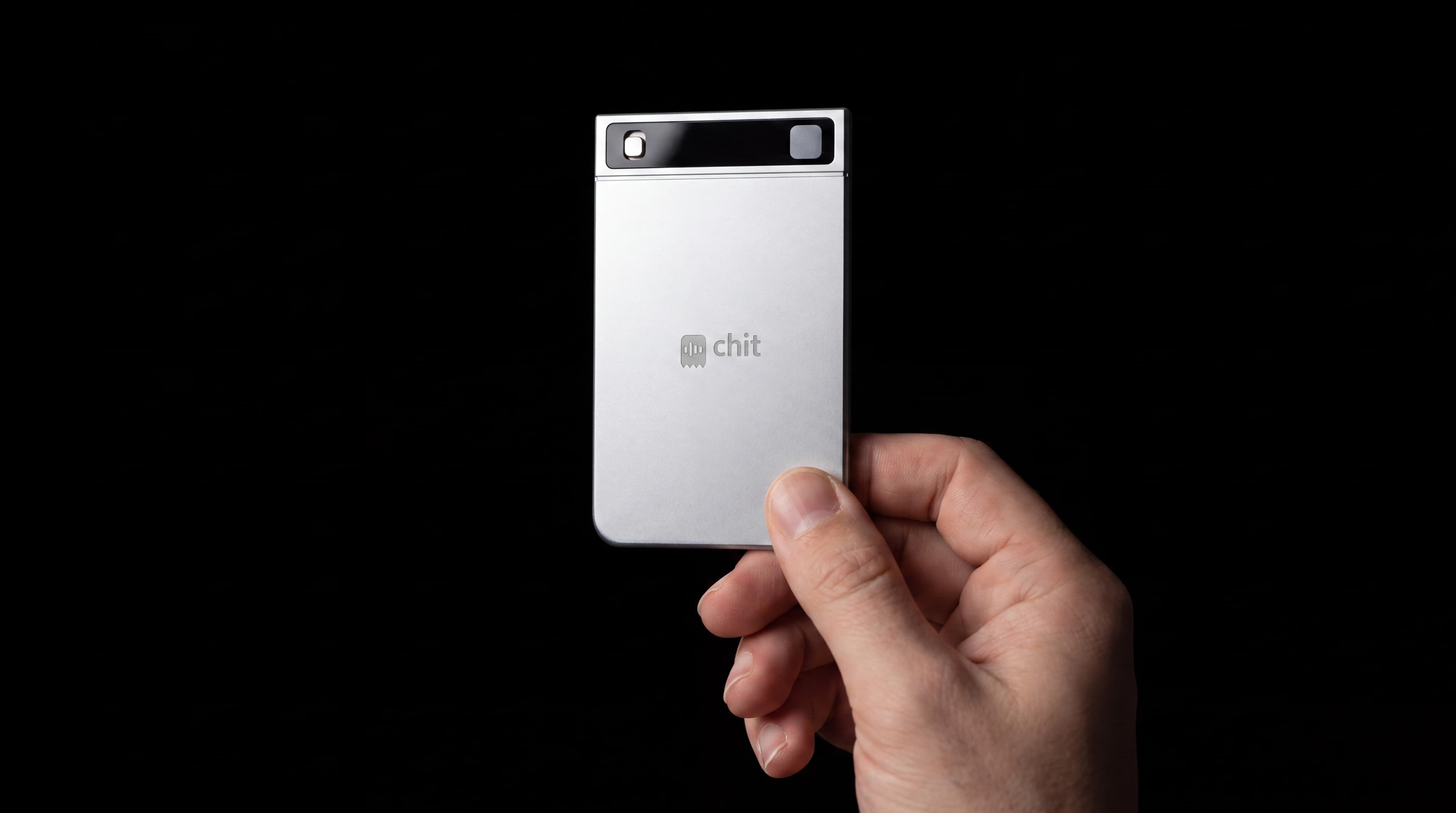
chit records only while the button is held and returns a transcript, summary, and next steps with its AI membership. A technician can record their own recap, review the output, and use the fields above to prepare the handoff.
This page describes a suggested review workflow. It does not promise automatic completion of a service ticket, customer approval, or a parts order. Confirm the integration setup for your team before relying on a direct connection to a job record.
chit one costs $129 and chit one Pro costs $179, plus $9/month for the AI. Membership billing starts 14 days after checkout; devices are built to order with delivery in about three weeks, so billing may begin before delivery. The template is free to use with your existing notes process.
Good questions
What should a service call note include?
Include the job reference, reported issue, observed findings, work completed, current status, and next steps. Add the owner, date or checkpoint, and any supporting-record references the office needs.
Can I use this for HVAC, plumbing, or electrical visits?
Use it as a general communication structure and add the technical fields your business requires. It is not a trade inspection checklist or a substitute for service procedures.
Should I record an uncertain diagnosis as a finding?
Keep it labeled as uncertain. Separate the reported symptom, the observation, and any interpretation so the next person can see what was actually established.
Does a spoken recap replace the customer approval record?
Keep the approval reference in the system your business uses. The recap helps the office find and check that record; it should not turn an unresolved approval into confirmed work.
Reviewed 2026-09-08.
Elsewhere on the site
Nearby trades
chit for HVAC
A clear post-visit recap helps the office see which job needs the next step.
Service plumberchit for plumbing
A useful visit recap keeps the scope, findings and next office action together.