chit at work
Showing follow-up notes: capture client reactions before the next property erases them
By the fourth showing of the day, the second one is gone. "They liked it" is not a note — what they liked was the light in the kitchen and what killed it was the garage, and the version of you who heard both is sitting in the car outside the fifth property, already thinking about parking.
This is general information, not legal advice. Recording law varies by state and by situation, it changes, and only a lawyer in your jurisdiction can tell you what applies to you. chit records only while you hold the button — that is a fact about the device, not a statement that any particular recording is lawful.
The four-showings-deep memory problem
Showing days are structurally hostile to memory: a sequence of similar rooms, similar scripts and similar small talk, with the distinguishing details — her reaction to the yard, his question about the roof's age, the school-district worry — arriving in passing, mid-walk, while you are also running the lockbox and the schedule. Nothing about that day supports typing notes, and so the feedback that should drive the next search gets reconstructed days later, thinly.
The tap-talk-drive routine
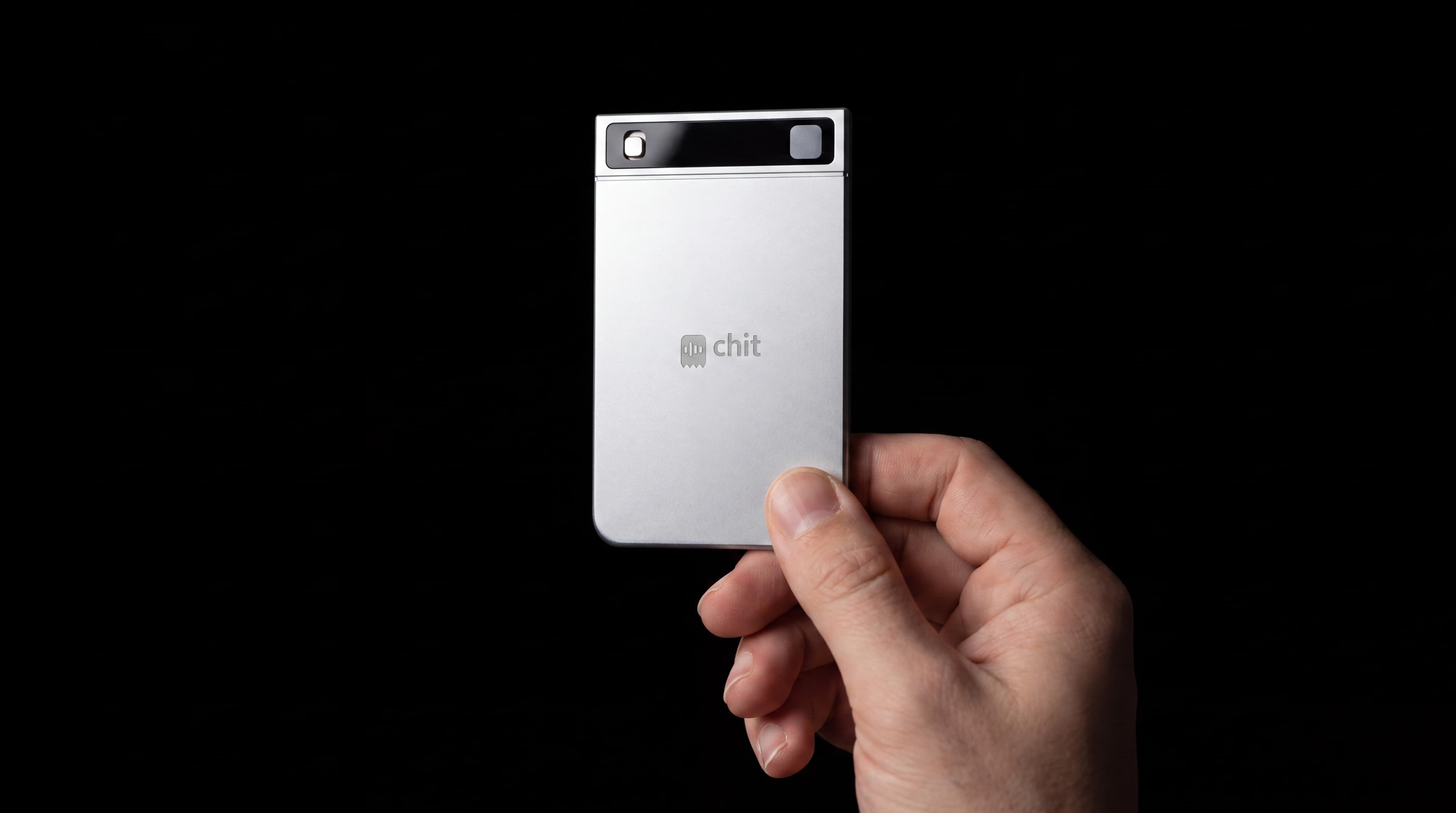
The fix costs sixty seconds per property. Back in the car, before you pull out: hold the button and say the address, who you showed it to, what landed, what killed it, and what you promised. chit is a card with one button — nothing to open, nothing to unlock — and the capture works with no signal and syncs later.
Done after every showing, this is the highest-leverage minute of the day: the debrief happens while the reactions are still specific, and it is only your own voice in your own car — no client recorded, no consent question, nothing to disclose. That is worth noticing, because it means the whole workflow on this page needs nobody's permission.
What chit hands back
Each debrief becomes a transcript, and the day comes back as a digest: property by property, what the clients reacted to, the objections, the must-haves, and the next steps pulled out — the disclosure to send, the comp to pull, the second showing to book. Ask-anything search runs across the whole history, so "which listing had the yard she loved" is answerable in February about a showing from October.
The same-evening follow-up
Speed is the edge in a competitive market, and the debrief makes speed cheap. With mail connected, the follow-up arrives drafted from what you actually said — specific to the light in the kitchen, not "great seeing you today!" — and you send it that evening. With calendar connected, the promised second showing can go on the calendar as a next step. chit does not write to your CRM; the summary is ready to paste into it, which still beats the note you would have written from memory on Thursday.
chit one is $129, chit one Pro is $179, plus $9 a month for unlimited transcripts, the digest, search, connections and backup. Membership billing starts about two weeks after checkout, roughly when the device arrives. Free shipping, free 30-day returns.
Recording during showings is a different thing
Everything above records only you. Recording during the showing — with clients present — is a different matter: recording other people is regulated state by state, several large markets require every party's consent, and a listed home may also have its own cameras and its own sensitivities. If you ever record with clients in the conversation, tell them first and get the yes out loud. The one-party versus two-party guide linked below explains the split; none of this page is legal advice. Our honest recommendation is simpler: the sixty-second solo debrief captures everything the follow-up needs, with no legal question attached.
Good questions
Do I need my clients' consent for this?
Not for the debrief — it is your own voice, alone, after they have left. Recording conversations with clients present is regulated and in several states requires everyone's consent; if you do that, ask first. None of this is legal advice.
Does it sync to my CRM?
No. The summary and next steps are ready to paste, and the follow-up email arrives drafted for you to send. First-party agents are coming; until then we say what it does today.
Will it keep up with a six-showing Saturday?
Yes — sixty seconds per property, offline in the car if it has to be, about a month of battery, and the whole day comes back that evening as one digest, property by property.
What does it cost?
$129 for chit one or $179 for chit one Pro, once, plus $9 a month for transcripts, the digest, search, connections and backup. Free 30-day returns.
Reviewed 2026-08-23.
Nearby trades