chit at work
Property walkthrough notes template for maintenance follow-up
A walkthrough note should let someone find the exact location, understand what was observed, and see the next action. Use this template for a routine property-maintenance visit or vendor walkthrough. It keeps observations separate from interpretations and makes areas you did not check visible.
Copy the visit header
Give the visit a stable reference before you start writing observations. Use the property or work-order ID your team already recognizes, then describe which areas the visit covers.
A clear scope prevents a short note from looking like a complete inspection of a building. If an area was not accessed, record that limitation instead of leaving the reader to assume it was checked.
Use one observation per row
Put the location before the description. “Loose label” is difficult to act on; “second-floor corridor, store-room door label” lets the next person find the item. Use the location names shown in the property’s existing records.
If you take a supporting photograph through your normal workflow, assign it a reference and caption. The text should explain what the reader is looking at. The photo reference is part of this template; it is not a claim about chit uploading or storing photos.
| Location / item | Observation | Reference | Next action | Owner / checkpoint |
|---|---|---|---|---|
| [Exact area] | [What you observed; uncertainty if any] | [Photo or work-order ID] | [Specific follow-up] | [Name; date or trigger] |
| [Exact area] | [What you observed; uncertainty if any] | [Photo or work-order ID] | [Specific follow-up] | [Name; date or trigger] |
Filled example: common-area follow-up
This fictional example covers a limited common-area visit. It is not an inspection certificate, a customer outcome, or a recommendation about building safety.
| Location / item | Observation | Reference | Next action | Owner / checkpoint |
|---|---|---|---|---|
| Second-floor corridor / store-room door | Room label is partly detached. | Photo P-03 | Confirm replacement wording and arrange repair through the existing work order. | Morgan / 2026-09-10 |
| Lobby / noticeboard | An expired event notice remains displayed. | Photo P-04 | Confirm current notice with the property office. | Lee / 2026-09-09 |
| Rear storage room | Room was not accessed during this visit. Condition not assessed. | Visit scope V-18 | Arrange access if this area is needed for the follow-up. | Morgan / date to confirm |
| Entrance / vendor work | Vendor reports the booked work is finished; reviewer has not checked it. | Work order W-41 | Review completion against the work order before closing it. | Lee / next site visit |
Separate the observation from the conclusion
A visible condition, a resident report, and a vendor statement are different sources. Label them. “Vendor reports complete” preserves useful information without pretending the reviewer verified the work.
Where a cause or remedy needs a qualified assessment, record the observation and the referral or follow-up. Do not let an AI summary supply a diagnosis that the visit did not establish.
A blank row can mean several things: nothing observed, item forgotten, or area not accessed. Use explicit wording when the distinction matters. “Not checked” is more useful than an unexplained empty field.
Record a recap, then reconcile it with the visit
At a suitable stopping point, recap one area at a time. Start with the visit ID and location, describe what was observed, name the supporting reference, and finish with the next action.
For example: “Visit V-18, second-floor corridor, store-room door. Label partly detached. Photo P-03. Morgan to confirm the wording and arrange the repair through the existing work order by September 10.”
Before sharing the note, check that each spoken location matches the property records. Reconcile photo references and work orders. Carry unresolved items forward with the same reference so the next visit can update them rather than create another disconnected note.
- Location is specific enough for another person to find.
- Reported information is labeled with its source.
- Uncertain details and unvisited areas are visible.
- Supporting references match the observation.
- Each next step has an owner or a clear assignment gap.
- The receiving person knows when to check again.
Where chit helps with the notes
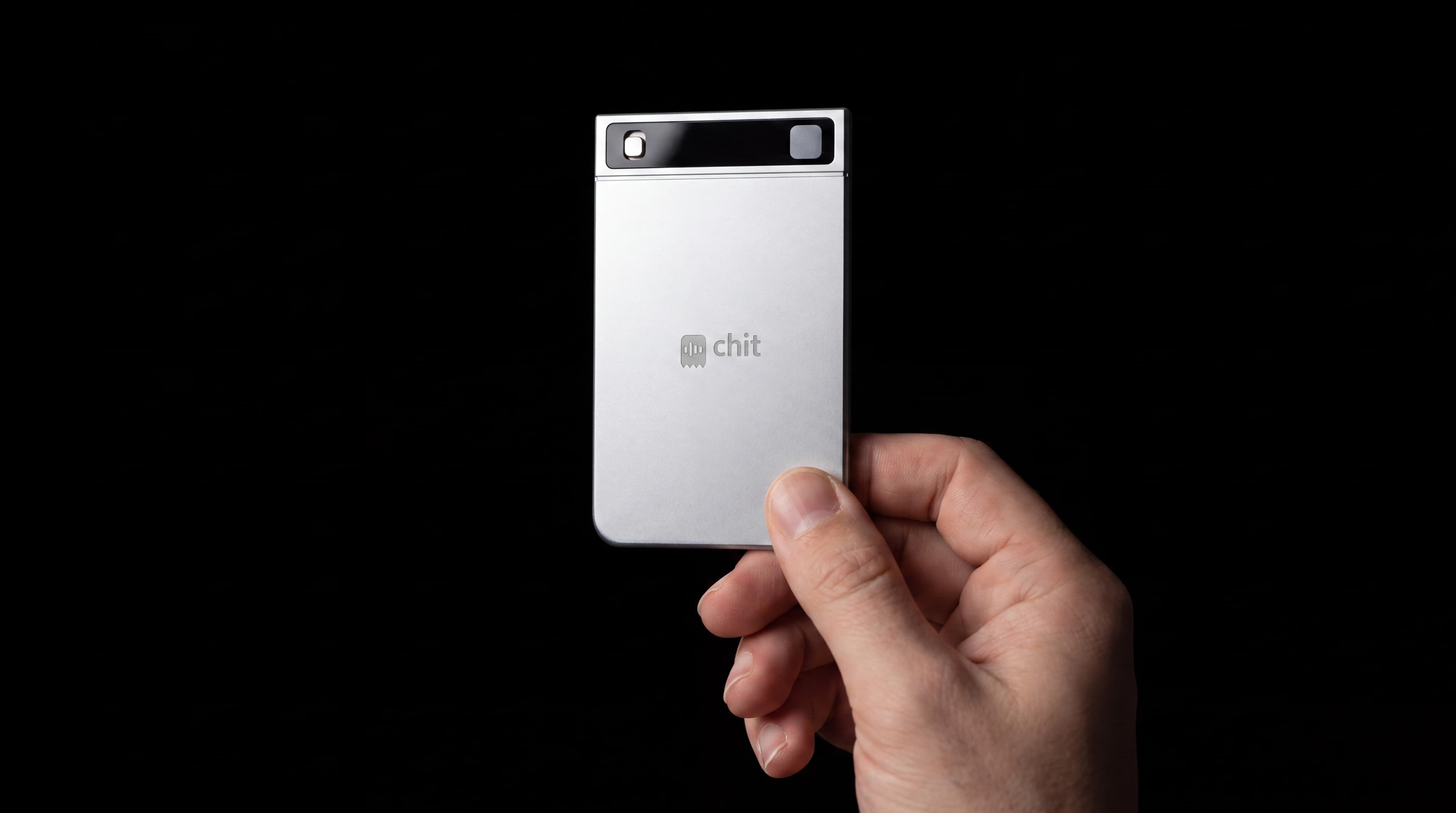
chit is a card-sized recorder that captures only while the button is held. Its AI membership provides transcripts, summaries, and next steps, plus plain-language search across captures. A spoken walkthrough recap can be the starting material for the reviewed note.
Use the template to organize that material and check it against the visit. The device does not replace a site assessment, a work order, or the reviewer’s decision that a task is complete. This page does not promise a property-management integration or automatic photo attachments.
chit one costs $129 and chit one Pro costs $179, plus $9/month for the AI. Membership billing starts 14 days after checkout; devices are built to order with delivery in about three weeks, so billing may begin before delivery. The template is free to use with your existing notes process.
Good questions
What is the difference between walkthrough notes and a formal inspection report?
These notes organize observations and maintenance follow-ups from the stated visit. Use the appropriate professional process and required report for a formal inspection; do not label this template as certification.
How should I record an area I could not access?
List it under NOT CHECKED, state the reason, and add an access follow-up if needed. Do not describe its condition as assessed.
Should photos replace the written observation?
Use a caption and reference alongside the observation. The note should tell the reader where the item is and what action is needed, even before they open the photo.
Can I create the note from a voice recap?
Yes, a recap can supply the first draft. Check locations, names, identifiers, and conclusions against the visit and supporting records before sharing it.
Reviewed 2026-09-08.
Elsewhere on the site
Nearby trades
chit for property maintenance
Turnover season runs on punch lists nobody typed.
Portfolio PMchit for property management
Every owner churn started as a call your PM handled from the car.