chit at work
Note-taking when writing and listening compete
This page is about a workload problem, not a person. Writing while listening asks one attention system to do two things, and for a lot of people the note either stops the listening or the listening stops the note. Separating those two jobs is a design idea, and it is worth trying regardless of why you are reading.
The idea: capture and organise are different jobs
Traditional note-taking asks you to do both at once — hear a thing, decide whether it matters, decide where it goes, and write it, all while the conversation continues. Each of those is a separate cognitive step and they compete for the same working memory that is holding the sentence you are listening to.
Splitting them means capture becomes the only thing happening in the moment, and organising happens later, when the conversation is not still running. That is not a claim about anyone's brain; it is an observation about an interface, and it applies to anybody who has ever looked up from a notebook and realised they missed a minute.
Why the friction of starting matters so much
The step that decides whether a capture happens is not the writing. It is starting. Unlock the phone, choose an app, find the right note, decide on a title — five small decisions, each of which is a place to lose the thread or the intention.
A physical button that needs no unlock, no app choice and no filename is a smaller ask than any software flow. That is a design observation, and it is the specific reason a piece of hardware can succeed where an app on the same person's phone did not.
Things worth trying, with or without a device
- Say it rather than write it. Speaking does not compete with listening the way writing does — do it in the gap after, not during.
- One thought per capture. Short and separate retrieves far better than long and combined.
- Capture at transitions: leaving the room, before starting the car, closing the laptop. Transitions are when things get dropped.
- Let the review happen on a schedule rather than when you remember — evening, once, everything at once.
- Do not name or file anything in the moment. Filing is organising, and organising is the job you moved to later.
What chit is, plainly
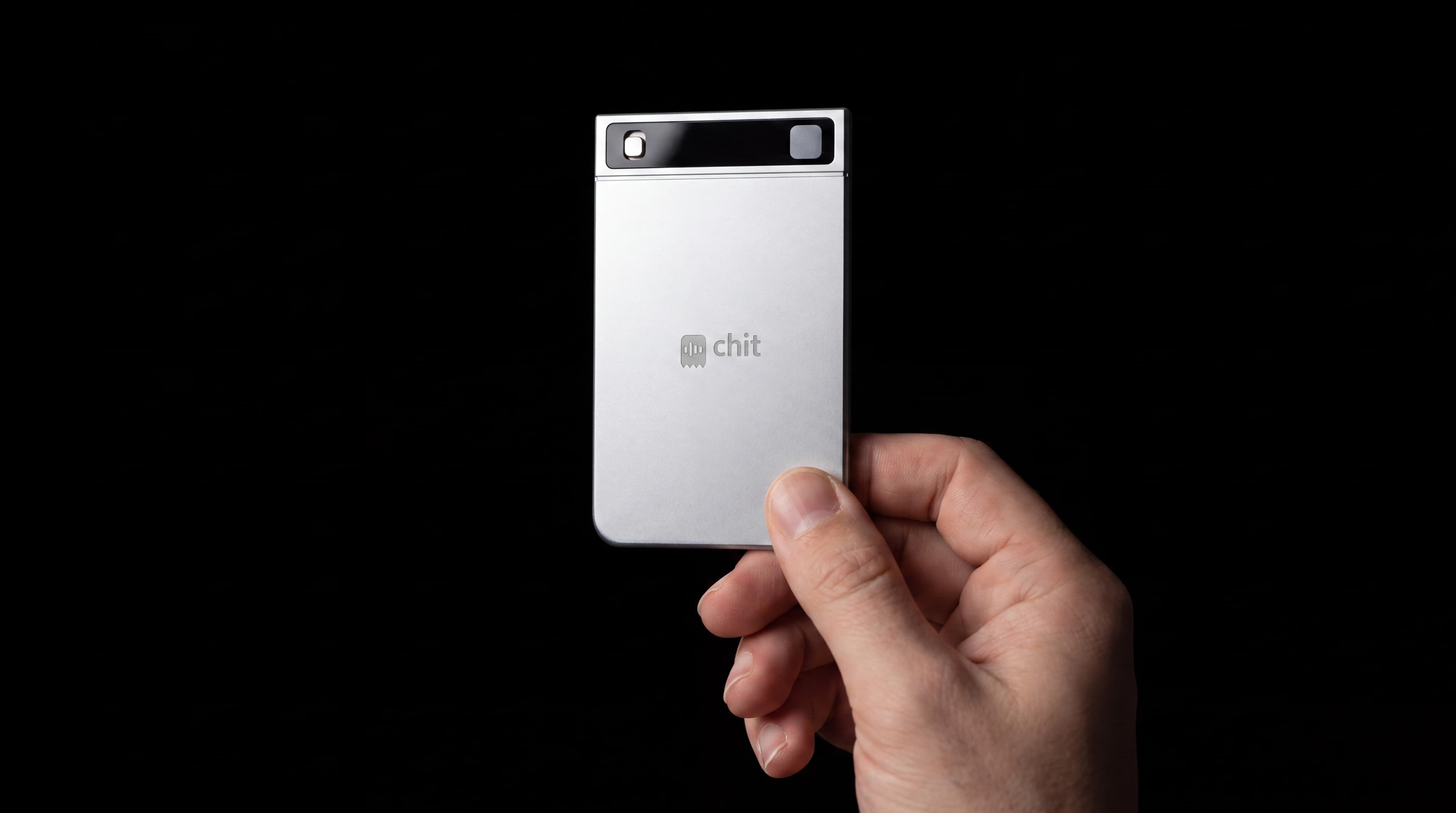
A card with one button that records while you hold it, and a $9 a month membership that turns each capture into a transcript, hands the day back as a digest of what happened and what was decided, and lets you ask questions across everything you have captured. No unlock, no app, no filename.
It is not a medical device, it is not a treatment, and it is not designed for any condition. It is a capture tool with a low starting cost, and whether that is useful to you is something free 30-day returns will answer better than a page will.
Good questions
Is chit designed for ADHD?
No. It is a voice recorder with a deliberately low-friction start. It is not a medical device, not a treatment, and not designed for any condition.
Why would a device beat an app on my phone?
One physical button with no unlock, no app choice and no filename is fewer decisions than any software flow — and starting is the step where captures are lost.
What do I do with all the captures?
The evening digest gathers the day into what happened, what was decided and what needs you next, so the organising happens once rather than continuously.
What if it does not work for me?
Returns are free within thirty days. That is a more honest answer than any page can give about whether a habit will fit you.
Reviewed 2026-08-07.
Nearby trades