chit at work
How accurate is voice to text?
The honest answer is that it depends almost entirely on the audio, and the range is wide enough that any single number is misleading. Knowing which conditions cause which failures is more useful than a percentage, and it is what decides whether a device like this fits your work.
The range, and why a single number misleads
On clean audio — one speaker, close to the microphone, quiet room, unaccented for the model's training data — modern systems are commonly reported in the mid-to-high nineties. On difficult audio — several speakers, distance, background noise, strong or less-represented accents — published results fall a long way, into the seventies and eighties.
Those are figures for the field generally, from published benchmarks rather than from us. We do not publish a word-error rate for chit, because we have not run a benchmark we would be willing to defend, and a marketing number nobody measured is worse than no number.
The four things that actually break it
Distance. The single biggest factor, and the one most within your control.
Crosstalk. Two people talking at once degrades output badly, and it is why meeting audio underperforms dictation even in a quiet room.
Proper nouns. Names, streets, manufacturers and model numbers have no surrounding context for a model to recover them from, so they are wrong most often — and they are usually the reason you made the note.
Accent and dialect. Performance varies with how represented a speaker's accent is in training data. This is a real, documented disparity across the field, not a quirk of any one product.
What this means for buying one
If your work depends on verbatim accuracy — court transcripts, quotes for publication, anything where a wrong digit is a serious problem — no automatic transcription is a substitute for verification. You check names, numbers, dates and every direct quote against the audio. That is true of every product in this category.
If what you need is to remember what was decided and what you promised, the accuracy question matters far less than it feels like it should. A transcript that gets a name slightly wrong still tells you the client approved the coil and wants a call Thursday.
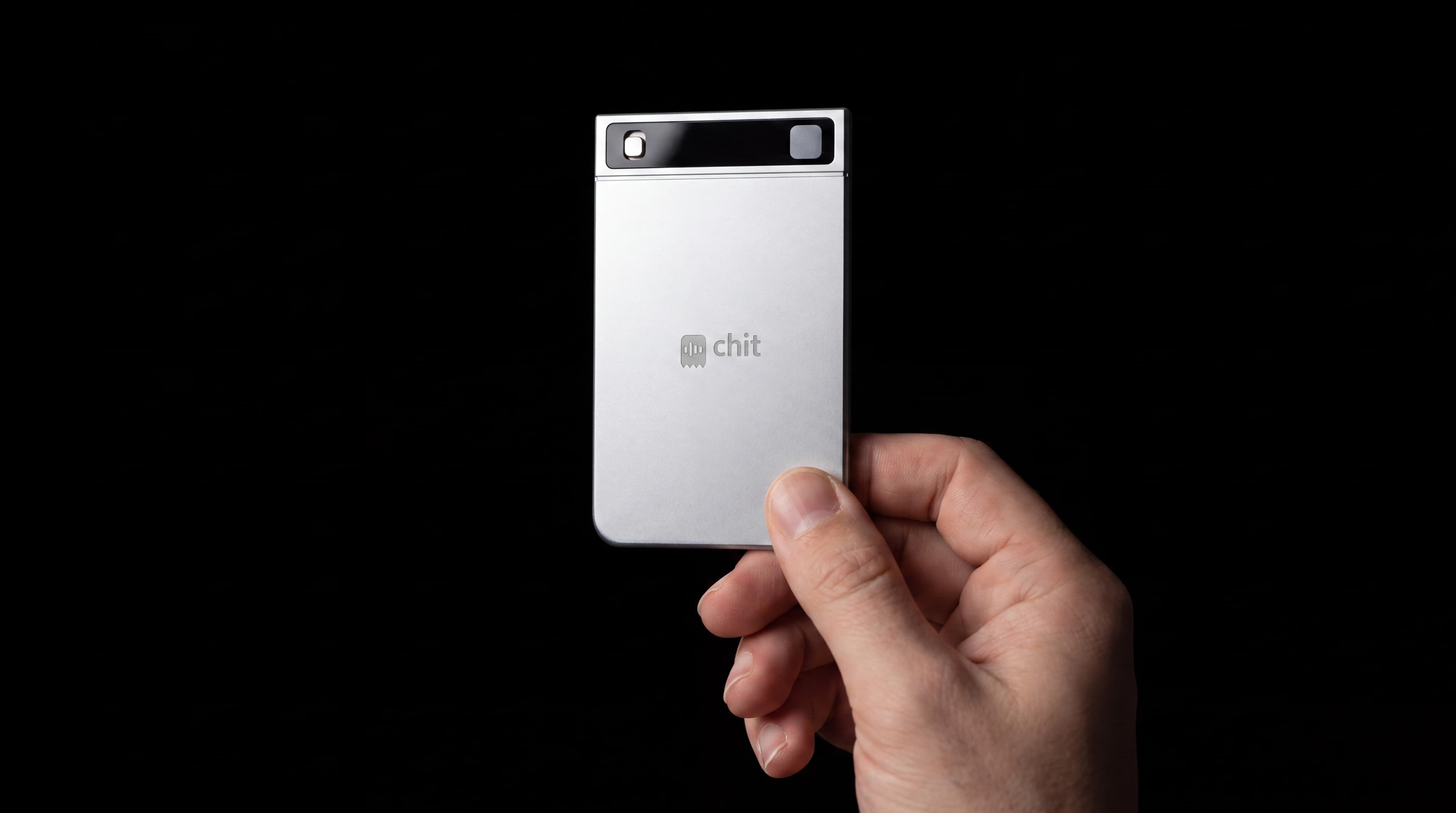
chit keeps the recording underneath the transcript for exactly this reason, so you can check the tape when it matters. And there are free 30-day returns, which is the only real way to find out how it does on your voice, your accent and your environments.
Good questions
What is chit's accuracy rate?
We do not publish one, because we have not run a benchmark we would defend. Field-wide, clean audio commonly reports in the mid-to-high nineties and difficult audio much lower.
Does it work with an accent?
Performance across the field varies with how represented an accent is in training data — a documented disparity, not specific to one product. The 30-day return window is the honest way to find out on your own voice.
Will it get model numbers right?
Proper nouns and part numbers are the most common errors anywhere. Saying them twice — once as a figure, once digit by digit — fixes most of it.
Can I check the transcript against the audio?
Yes. The recording is kept underneath the transcript, so you can always verify what was actually said.
Reviewed 2026-08-07.
Nearby trades