chit at work
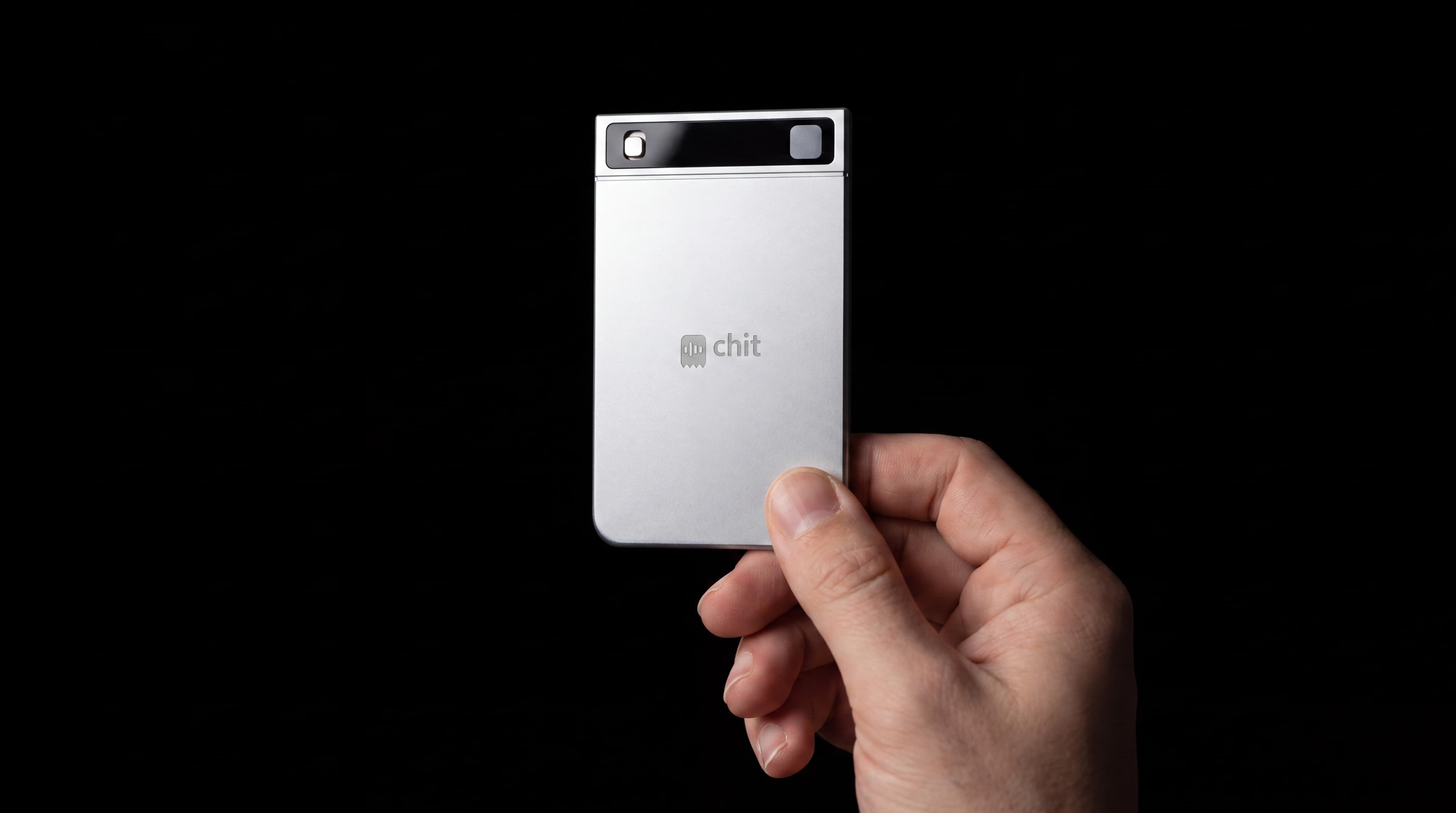
An AI voice recorder that works offline
Basements, crawlspaces, cab of a truck at 2am, a job site with one bar. If the recorder needs a connection at the moment you press it, it is not a recorder — it is an app. Here is exactly what works offline on chit and what does not, because the distinction matters and most pages blur it.
The part that works with no signal: capture
Hold the button and talk. The device records to itself. There is no connection involved in that moment at all — no cell, no wifi, no phone in range. This is the part that has to be true for a recorder to be usable in the places people actually work, and it is true regardless of what your signal is doing.
That covers the whole failure mode people are searching for: you are in a mechanical room, you find the thing, and you say it out loud. Nothing about that requires the internet.
The part that needs a connection: the intelligence
The transcript, the daily digest and search are not on the device. When chit next has a connection, the captures sync and the processing happens; the transcript and the digest arrive after that.
So the honest sentence is: capture is offline, the transcript arrives after sync. Anyone telling you a card-sized device transcribes with no connection at all is describing something else. We would rather you know exactly where the line is than be surprised by it on day two.
In practice this is invisible on a normal day — you drive back into coverage, or you get home, and it is done. It matters if you are away from any connection for days, in which case the captures sit safely on the device until you are back.
Why this is the right shape for field work
A phone-based recorder has a second problem in these places, which is that it is your phone. It is the thing you need for the call to dispatch and the map out, its battery is the constraint on your whole day, and getting it out with gloves on is a project. A separate card that runs about a month on a charge is not competing for any of that.
The other thing that changes with no-signal work is what you do with the moment. Most people who work in dead zones develop a habit of narrating on the way out — walking back to the truck, in the cab before the engine starts — because that is when the detail is still sharp and there was nothing to write on inside anyway.
What it costs and how it arrives
chit one is $129 and chit one Pro is $179, one time. The $9 a month membership is what runs the transcripts, the digest, ask-anything search, calendar and mail connections, and cloud backup — the card captures without it, you would just do the reading yourself.
Current lead time is about three weeks from order to delivery. Shipping is free in the contiguous United States and returns are free within thirty days, which is the honest way to find out whether it fits how you work.
Good questions
Can I record with no cell signal at all?
Yes. Recording happens on the device and needs no connection. The transcript and the digest arrive once the device next syncs.
Does it transcribe on the device?
No. Transcription happens after sync, not on the card. We would rather state that plainly than let 'works offline' imply something it does not.
How long can it go without syncing?
Captures sit on the device until it next has a connection — a multi-day stretch away from coverage is normal use, not an edge case.
Does it need my phone nearby to record?
No. The card captures on its own. The app is where you read the transcript and the digest afterwards.
What is the battery like if I am out for a week?
About a month of typical use between charges, over USB-C. It is not competing with your phone for charge, which is usually the real constraint on a long day.
Reviewed 2026-08-07.
Nearby trades
chit for OTR trucking
Detention pay dies without a timestamp. Your drivers already narrate it - capture it.
Pumper / field inspectorchit for oil and gas field services
One-handed capture for hands-full sites: hold the button, say it, let go.
Superintendentchit for construction
Your daily log is your delay-claim defense. Voice makes it actually get written.